Dubai Municipality Cracks Down on Illegal Partitions in Flats: Impact Felt by Indian and Pakistani Expats
In the bustling neighborhood of Al Rigga, Dubai, two brothers from India, Karim and Azim, had been living in a loft-style setup inside a two-bedroom apartment, paying AED 1,800 per month. Working as taxi drivers on opposite shifts—one during the day and the other at night—their shared living arrangement was both economical and convenient. The loft space, spread over two levels, offered more room than typical shared accommodations.
“There were around 16 of us living in that flat,” said Karim. “It wasn’t luxury living, but each of us had a small space. It worked.”
However, their stability came crashing down last weekend when Dubai Municipality, in collaboration with the Dubai Land Department and Civil Defense, launched a major inspection campaign. The focus was on illegal partitions and modified living areas deemed unsafe—part of a broader move to enforce building codes and protect residents.
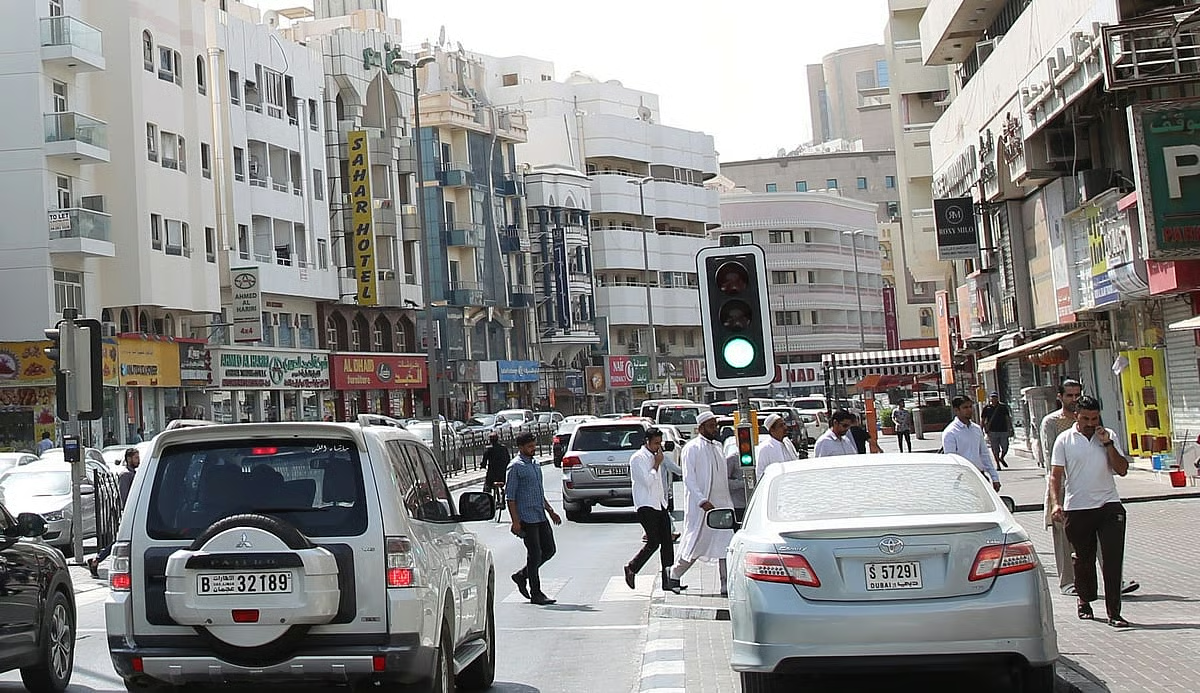
Targeted areas included Al Rigga, Al Muraqqabat, Al Barsha, Al Satwa, and Al Raffa, all home to many low-income residents and expats from India, Pakistan, and other South Asian countries.
“We were told by the agent it was okay to live like this,” said Azim. “We didn’t know it was against the law. No one warned us directly.”
Shared Kitchens, Partitioned Bedrooms — Unsafe But Common
Rupa, a salon worker from Nepal, had been living in a converted kitchen space in Al Muraqqabat for AED 600 a month. The kitchen was separated by a curtain and equipped with a fan.
“It wasn’t ideal, but for someone who works all day, I just needed a place to sleep,” she said. After the building inspection flagged her unit, she had no choice but to vacate. She is now staying temporarily with a friend.
Raza, a Pakistani delivery rider, was paying AED 700 to live in a plywood-partitioned section of a bedroom in Muraqqabat.
“We knew it wasn’t legal, but we didn’t have many options. We left immediately when the inspectors came. No notice was given to us directly.”
Bilal, who works at a watch shop in Deira, shared a living space with five others in a partitioned hall.
“The partitions were made by the landlord. We didn’t do anything ourselves. We heard about municipality notices, but we never received one.”
Though aware of the legal gray area, Bilal admitted affordability left them with no better choice.
“How can you find proper accommodation when you earn only AED 2,000 a month?” he said.
Indian Expat Forced to Relocate to Sharjah
Farida, a single mother from India, had been renting a small partitioned room with her daughter in Al Muraqqabat.
“I only work part-time. This was all I could manage,” she said. “Now we’re staying at my cousin’s place in Sharjah, but it’s not sustainable.”
Municipality’s Message: Focus is on Safety, Not Punishment
Dubai Municipality clarified that this campaign is about ensuring safety standards, not targeting expat tenants. Landlords and building owners were given prior warnings and are required to obtain official approvals before modifying residential units with lofts or partitions.
“Illegal modifications pose serious fire hazards and structural risks,” a Dubai Municipality spokesperson said. “We aim to raise awareness and protect public safety—not punish residents.”
The authority stressed that all changes to rental units—whether temporary or permanent—must comply with Dubai’s building regulations. Unapproved changes such as wooden partitions, lofts, or converting kitchens into bedrooms are not only unsafe but also illegal.
Final Thoughts
Dubai’s rising population, especially among Indian and Pakistani expatriates, has led to a growing demand for affordable housing. However, this recent crackdown highlights the delicate balance between low-cost accommodation and legal compliance.
As the city continues to evolve, it is critical for both tenants and landlords to stay informed about residential laws in Dubai and make housing decisions that prioritize safety, legality, and sustainability.
About the Author