Iran-Israel Conflict Escalates: Regional Tensions Stir Concerns Across Dubai, India, Pakistan
Dubai, June 13, 2025 – In one of the most significant escalations in recent Middle Eastern history, Israel launched a bold military offensive against Iran early Friday morning, targeting critical infrastructure and top Iranian military leadership. The covert operation, codenamed “Rising Lion,” has not only intensified Israel-Iran tensions but has also sparked concern across South Asia, especially in India, Pakistan, and the UAE, where millions of expatriates live and work.
Israeli Strikes Target Iran’s Nuclear and Military Leadership
The Israeli Defense Forces (IDF) launched a surprise attack on strategic Iranian sites including missile production facilities, nuclear infrastructure, and command centers. Among the casualties were some of Iran’s most senior military officials, including Mohammad Hossein Bagheri, Chief of Staff of Iran’s armed forces, and Hossein Salami, Commander-in-Chief of the Islamic Revolutionary Guard Corps (IRGC).
This dramatic strike marks a turning point in the long-standing shadow war between the two nations and may have far-reaching geopolitical consequences across the Middle East and South Asia.
Iran Declares Start of ‘Revenge’ as Missiles Rain Down on Israel
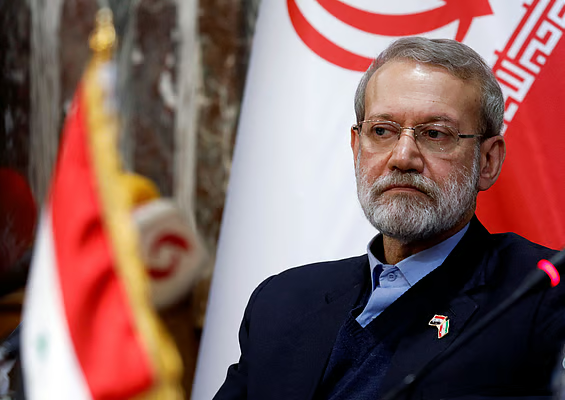
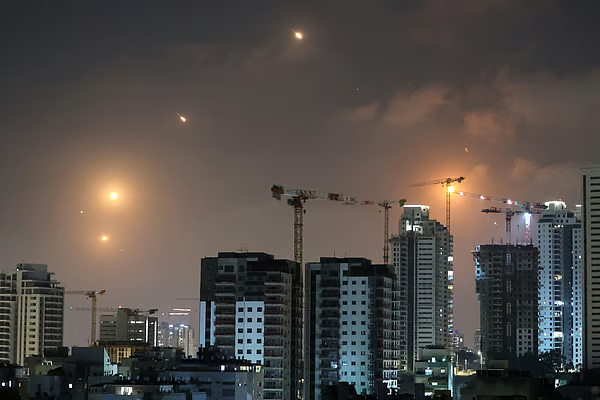
Hours after the Israeli operation, Iran responded with fury, launching hundreds of ballistic missiles and drones toward Israeli cities. The country’s Supreme Leader, Ayatollah Ali Khamenei, declared that “revenge has started”, vowing that Israel would pay a heavy price and would no longer be able to carry out “hit-and-run” attacks without retaliation.
Air raid sirens sounded across Tel Aviv and Jerusalem, with reports of explosions overhead and active defense systems attempting to intercept the barrage. The IDF confirmed missile activity and is now operating in full force to neutralize the threat.
Regional Response: India, Pakistan, and Dubai Monitor Situation Closely
The escalating conflict has raised serious concerns in India and Pakistan, both of which have significant diplomatic, economic, and human ties to the Middle East. Government officials in New Delhi and Islamabad are closely monitoring the situation, with preliminary travel advisories already issued for their citizens in the region.
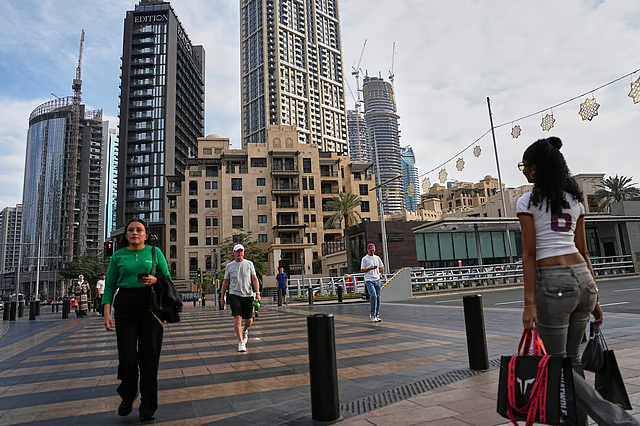
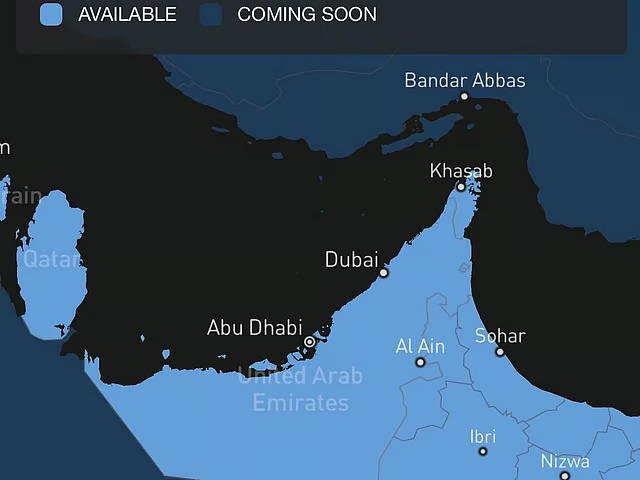
Meanwhile, in Dubai and across the UAE, home to millions of expatriates from India and Pakistan, authorities are on high alert. Though the UAE has not taken sides, its proximity to the conflict zone and its role as a regional hub make it a critical observer in this developing crisis.
The conflict threatens to impact air travel, energy markets, and foreign investments across the Gulf region, further stressing the importance of diplomatic de-escalation.
Trump’s Nuclear Ultimatum and Rising Global Stakes
Former U.S. President Donald Trump revealed that his administration had issued a 60-day ultimatum to Iran regarding its nuclear program prior to the Israeli strikes. He claimed that Tehran failed to respond, triggering unilateral Israeli action without American endorsement.
This disclosure adds a layer of complexity to the unfolding crisis, with major powers now indirectly tied to the conflict’s momentum.
Live Coverage Disrupted Amid Iranian Strikes
A live press briefing by IDF spokesperson Effie Defrin was abruptly cut short as incoming Iranian missiles targeted central Israel. In his remarks before the interruption, Defrin confirmed that over 200 targets inside Iran had already been hit, including the nuclear site in Isfahan.
The official IDF account later posted on X (formerly Twitter), stating that “all of Israel is currently under Iranian fire,” urging civilians to remain sheltered.
A Region on Edge: What’s Next?
As of now, the full scope of the damage on either side remains unclear, but the situation is fluid and dangerous. With India, Pakistan, and the UAE all deeply integrated into the Middle Eastern economy and workforce, the ripple effects of this conflict could be widespread.
For readers in Dubai, Mumbai, Lahore, and beyond, this is not just another geopolitical crisis—it’s a moment with potential impact on daily life, energy costs, and regional stability.
Stay tuned for real-time updates and in-depth coverage as this developing story unfolds.
About the Author