France’s Macron Urges Restraint After Israel Strikes Iran Amid Rising Tensions Impacting Dubai, India, Pakistan, and the USA
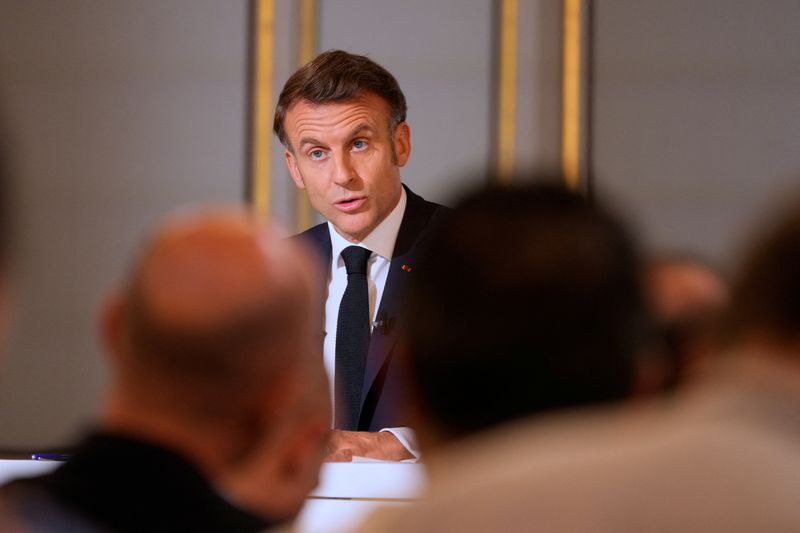
Paris, June 13, 2025 – Following a dramatic escalation in the Middle East after Israel’s military strikes on Iran, French President Emmanuel Macron has called for restraint while squarely placing the blame on Tehran for destabilizing the region. The targeted attacks, which included Iranian nuclear sites, have sparked global concern — from Dubai to Washington, New Delhi to Islamabad, and across Europe.
Speaking after a day of intense consultations with regional and international leaders, Macron stated, “Iran bears a very heavy responsibility for the destabilisation of the region,” referencing Tehran’s continued uranium enrichment at levels dangerously close to weapons-grade.
Iran’s Nuclear Activities Raise Alarm in France, UAE, India, and Beyond
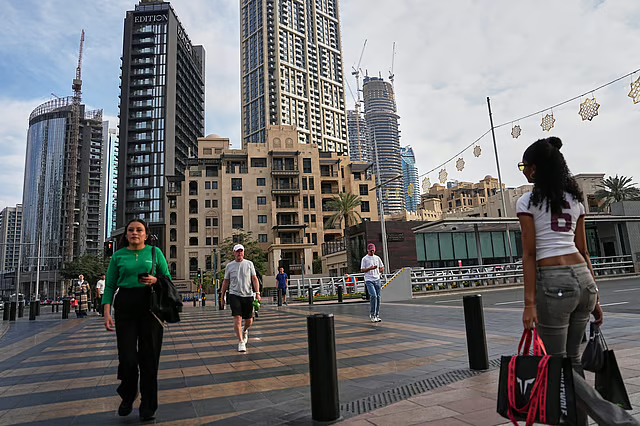
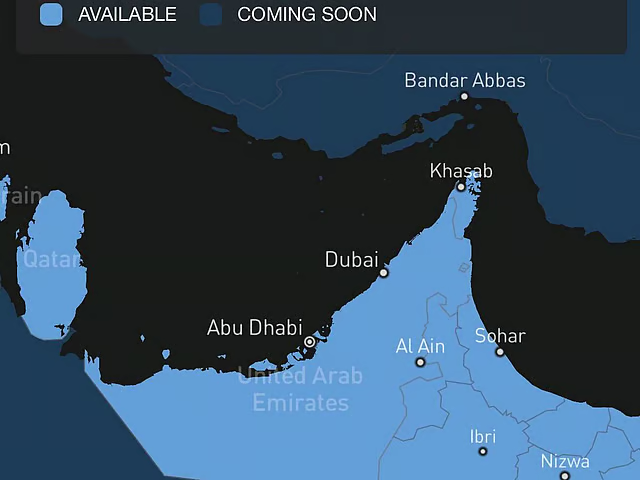
Macron highlighted that Iran’s nuclear program lacks civilian justification, suggesting the country is nearing a “critical point” in developing a nuclear weapon — a claim that Iran denies. This development is raising alarms in major global capitals including Dubai, which serves as a key hub in the Middle East, and India and Pakistan, both of which maintain strong political and economic ties with the region.
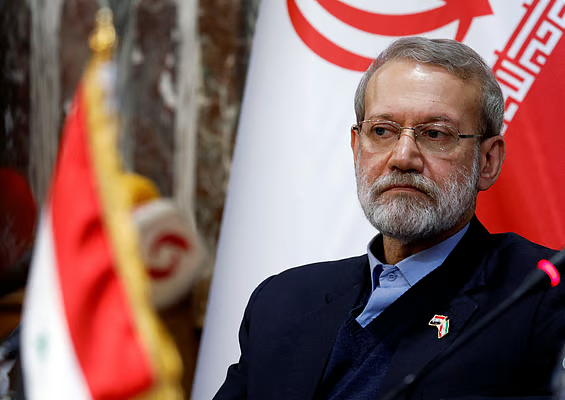
While Iran continues to insist its nuclear ambitions are peaceful, France, the USA, and many Western nations remain skeptical. Macron warned that the current situation risks spiraling into uncontrolled escalation, with consequences for European and global stability.
Global Economic and Security Impacts a Concern for UAE, South Asia, and the U.S.
Macron expressed concerns over the broader economic fallout that a prolonged conflict could cause, particularly for energy markets that affect Dubai, India, and Pakistan, all of which are deeply interconnected with Middle Eastern trade routes and oil supply chains.
While Macron reaffirmed France’s commitment to defending Israel if attacked by Iran, he ruled out any direct military action against Tehran. “France will not take part in any offensive operation against Iran,” he said, highlighting the delicate balance between defense and diplomacy.
Macron Calls for Caution in Resuming U.S.-Iran Nuclear Talks
Acknowledging recent attempts to revive the U.S.-led Iran nuclear deal, Macron noted that diplomatic efforts have become even more difficult following the recent military confrontation. Talks between Washington and Tehran, which resumed just two months ago, now hang in the balance.
The United States has not confirmed involvement in Israel’s recent strikes, but the situation adds new urgency to Washington’s diplomatic calculus. Countries like India and Pakistan, with large Muslim populations and strategic interests in the region, are also closely watching how the U.S. and Europe navigate the evolving conflict.
France–Israel Relations Under the Spotlight
Although France and Israel have long maintained close ties, Macron was candid in his criticism of some of Israel’s recent military actions, particularly in Gaza. He emphasized that French support for Israel is not unconditional, stating, “Paris has the right to disagree with some Israeli government decisions when they go against Israel’s own security interests.”
This nuanced position reflects the broader international debate over military action versus diplomatic engagement, especially as tensions mount across the region.