Tensions Rise in the Gulf as Explosions Rock Doha Amid Iranian Threats – Impact on Dubai, Qatar, and India
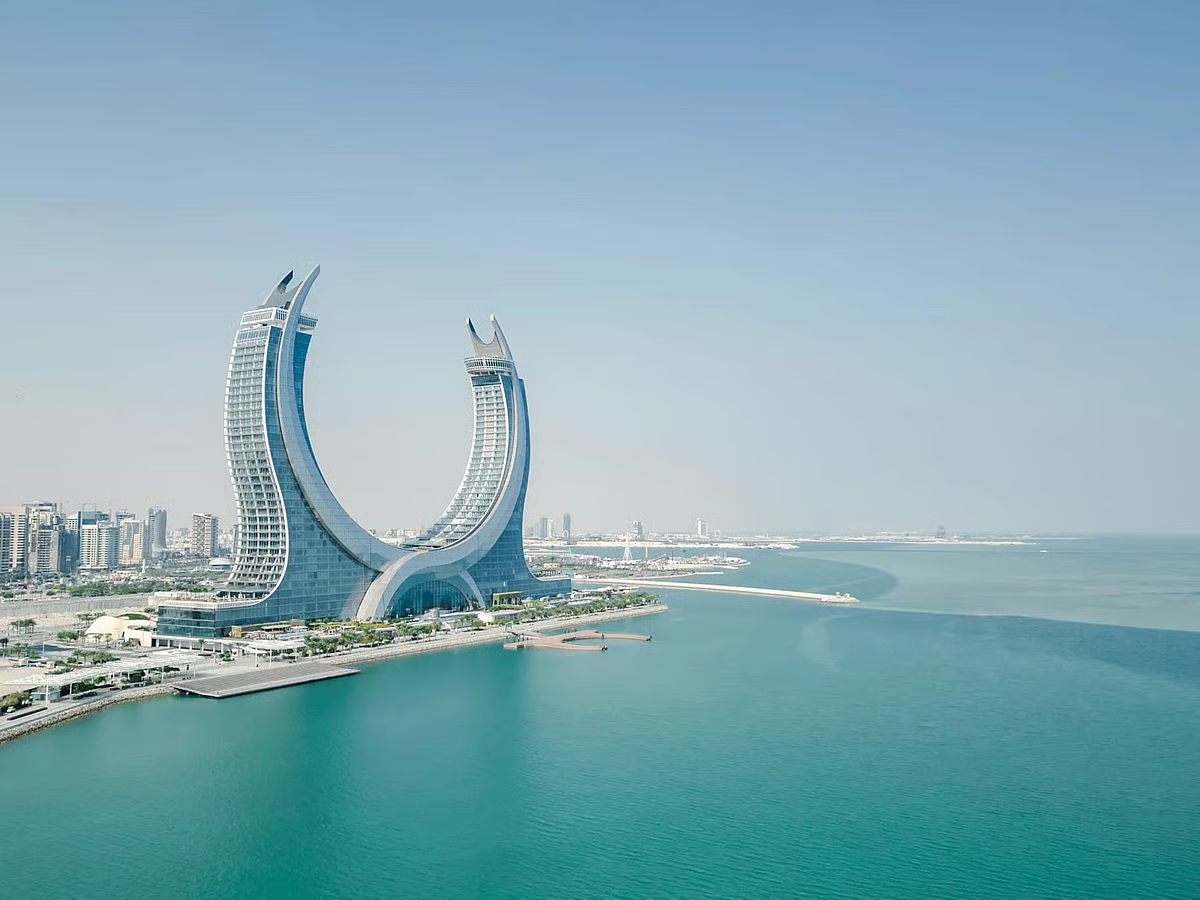
Explosions echoed across Doha, the capital of Qatar, on Monday, as tensions in the region escalated dramatically. According to eyewitnesses and Reuters reports, the blasts occurred shortly after a credible Iranian threat emerged targeting the US-operated Al Udeid Air Base—a key military facility in the Gulf.
This development triggered heightened security protocols. The Qatari government swiftly suspended air traffic operations temporarily, prioritizing the safety of both residents and international visitors. Meanwhile, the US Embassy in Qatar urged American citizens to shelter in place as a precautionary measure.
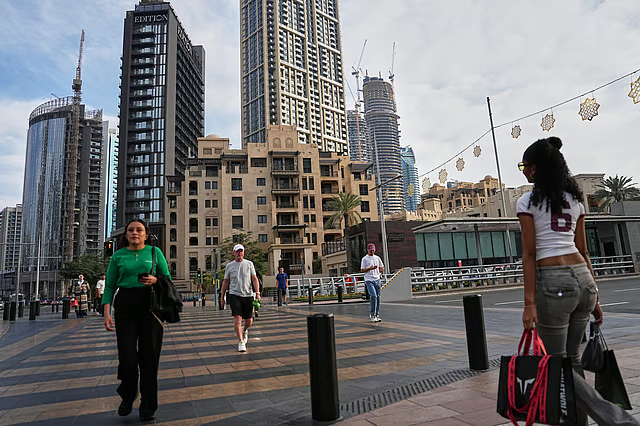
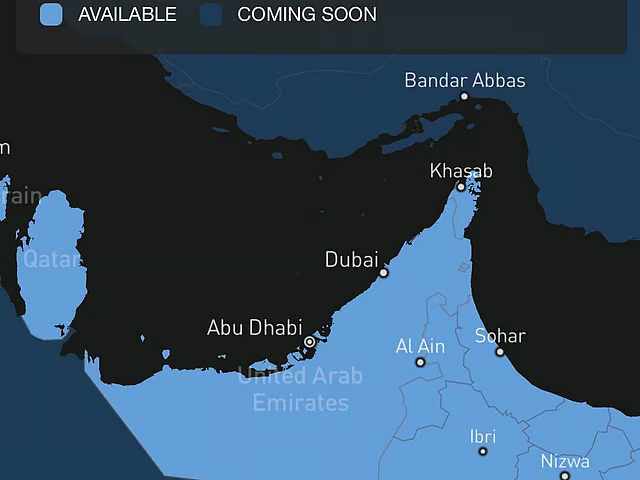
The broader geopolitical crisis is drawing international attention, especially in neighboring Dubai and across the UAE, where security analysts are closely monitoring the situation. The possible ripple effects on India, a major importer of Gulf oil and a strategic regional partner, are also under consideration by both economic and defense experts.
The situation escalated after US bombers reportedly dropped massive 30,000-pound bunker-buster bombs on Iran’s underground nuclear facilities over the weekend. In response, Iran issued threats of retaliation, while former US President Donald Trump openly hinted at the possibility of regime change in Tehran.
In a bold move, Israel launched a strike on a political prison in Tehran, signaling an expansion of its target list beyond just military infrastructure, aiming now at the foundational elements of Iran’s regime.
US intelligence officials have warned that Iran may soon launch retaliatory attacks on American military assets in the Middle East. Still, diplomatic efforts are ongoing, with Washington seeking to prevent a full-scale escalation. The Indian government, too, is expected to issue a travel advisory for its citizens in the Gulf region, given its strong expat presence in both Dubai and Qatar.
Despite Iran’s threats to disrupt oil shipments through the Gulf—an action that could have severe consequences for India’s energy supply chain—global oil prices remained largely stable. Analysts suggest that traders remain skeptical Iran would carry out actions that severely impact the global energy market.
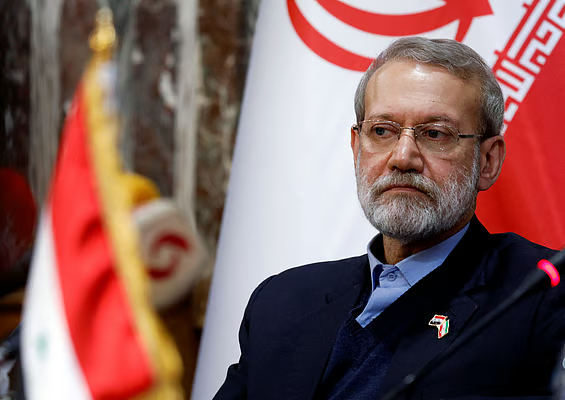
In a related development, Iranian Foreign Minister Abbas Araqchi visited Moscow for high-level talks with Russian President Vladimir Putin, seeking strategic support from one of Iran’s few remaining global allies.
With rising uncertainty in the Gulf and potential implications for major economic hubs like Dubai, along with vital energy partners such as India, the situation continues to unfold rapidly. Stakeholders across the Middle East and South Asia are bracing for what could be a defining moment in regional geopolitics.