Cebu Earthquake Tragedy in the Philippines Raises Concerns Among Dubai Community
A devastating 6.9-magnitude earthquake struck the central Philippines on September 30, 2025, claiming nearly 60 lives and injuring hundreds. The powerful tremor hit off the northern coast of Cebu province, forcing hospitals to treat patients in makeshift outdoor areas as hundreds of aftershocks shook the region overnight.
The US Geological Survey (USGS) reported the quake at a shallow depth of 10 kilometers, with the epicenter near Bogo City, home to around 90,000 people. Scenes of panic unfolded as residents fled collapsing buildings, while dramatic videos on social media showed church belfries falling, bridges swaying, and shopping malls shaking violently.
Local officials confirmed that 22 buildings were damaged, including schools, commercial properties, and residential structures. The Cebu provincial government has issued an urgent call for medical volunteers and rescue workers, with reports suggesting that some residents may still be trapped under debris.
Emotional Impact on Dubai’s Filipino Community
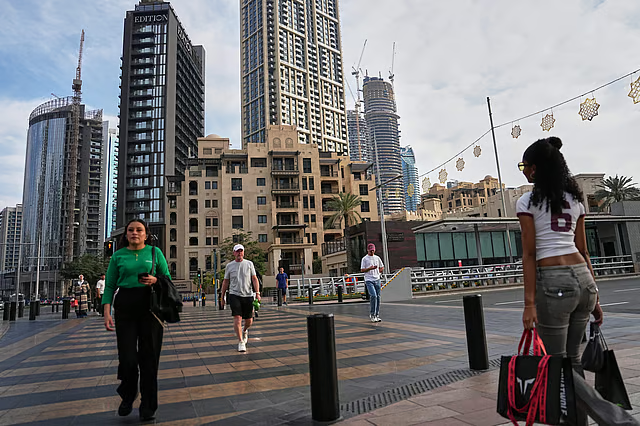
Dubai is home to one of the largest Filipino expatriate communities in the GCC, with many residents having direct family ties to Cebu and surrounding provinces. The news of rising casualties has left many in Dubai anxiously following updates, while also sparking solidarity movements across the UAE.
Historically, the UAE government and Dubai authorities have extended humanitarian assistance to the Philippines during natural disasters, providing relief aid, medical supplies, and financial support. Experts expect similar assistance efforts in the aftermath of this tragedy.
Economic and Social Ripple Effects
Beyond the human tragedy, analysts note that the earthquake could have ripple effects on trade, labor, and tourism between the Philippines and Dubai. Cebu is a central hub for both workers and tourists, and disruptions may indirectly affect sectors like Dubai’s hospitality, tourism, and real estate markets, which employ a significant number of Filipino expatriates.
Despite the tragedy, Dubai continues to highlight its own safety, resilience, and preparedness measures, ensuring that its real estate developments, skyscrapers, and infrastructure projects meet international safety standards.
Seismic Context
The Philippines lies on the Pacific Ring of Fire, an area prone to intense seismic activity. While earthquakes are rare in Dubai and the UAE, authorities regularly update building codes and safety protocols to ensure the emirate remains a secure hub for global investors, residents, and tourists.
FAQs: Cebu Earthquake in the Philippines and Its Impact on Dubai
1. How does the Cebu earthquake affect Dubai residents?
Dubai has one of the largest Filipino expatriate communities in the GCC. Many families in Dubai have relatives in Cebu and surrounding provinces, so the tragedy has an emotional and social impact on the Filipino community living in the UAE. It also raises awareness about the importance of safety, disaster preparedness, and humanitarian support in Dubai.
2. Is Dubai at risk of earthquakes?
Dubai is not located on a major seismic fault line, making the emirate relatively safe from large earthquakes. However, Dubai real estate developments, skyscrapers, and infrastructure are built with advanced engineering standards to ensure resilience and safety against natural disasters.
3. Will the Cebu earthquake affect Dubai’s economy?
Directly, no. But Cebu is a key hub for Filipino workers and tourism. Since many Filipinos are employed in Dubai’s hospitality, retail, and real estate sectors, any disruption in the Philippines can indirectly affect workforce movements, travel, and remittances.
4. How does Dubai support the Philippines during natural disasters?
The UAE has a strong history of humanitarian aid and disaster relief. During past earthquakes and typhoons, Dubai and the UAE government have provided emergency funds, medical supplies, and relief operations to assist the Philippines, reflecting the strong ties between the two nations.
5. Why is Dubai considered a safe hub for tourism and investment despite global crises?
Dubai continues to position itself as a safe, resilient, and forward-looking global city. With world-class infrastructure, strict safety codes, and economic stability, Dubai remains a trusted destination for tourism, real estate investment, and long-term residency even when other regions face natural disasters or political uncertainties.
Source : Khaleejtimes