Strong Earthquake Strikes Philippines – Global Concerns Felt in Dubai
A powerful 6.9-magnitude earthquake struck Cebu in the Philippines on Tuesday, September 30, 2025, at 9:59 pm local time (5:59 pm UAE time), according to AFP and local police reports. At least five people have tragically lost their lives as a result of the tremor.
The Philippine Institute of Volcanology and Seismology (Philvolcs) initially measured the quake at 6.7 magnitude, with a shallow depth of 10 kilometers. Shockwaves were felt across several areas, including Iloilo City on Panay Island, north of Cebu. Residents described rushing outdoors in panic as the ground shook violently.
One Iloilo resident, Amelia R., shared that she quickly grabbed her pet and ran outside for safety, while others in nearby communities described similar scenes of fear and confusion.
The German Research Centre for Geosciences (GFZ) reported the epicenter was located in Leyte, with tremors also recorded in San Fernando, Cebu (Intensity III) and Laoang, Northern Samar (Intensity II).
Tsunami Warning Issued
Following the earthquake, Philvolcs issued a tsunami warning for the provinces of Leyte, Cebu, and Biliran. Authorities advised the public to stay away from coastal areas and beaches until the advisory is lifted, as unusual waves and aftershocks are expected.
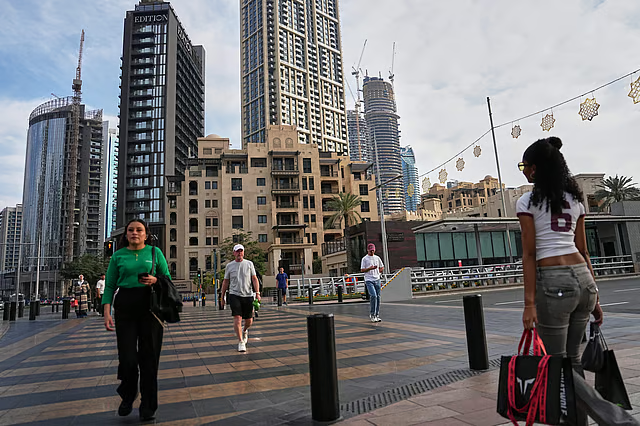
Impact on Dubai and the UAE Community
Dubai has a large Filipino expatriate community, many of whom have close family ties in Cebu and surrounding provinces. News of the earthquake has raised concerns among UAE residents, with many seeking updates about loved ones back home.
The UAE, known for its strong humanitarian efforts, has historically provided aid and relief support during natural disasters in the Philippines. Experts believe that any significant disruption in Cebu, a key hub for tourism and trade, could also have ripple effects on Filipino overseas communities, including those living and working in Dubai’s hospitality, tourism, and real estate sectors.
Preparedness and Safety Awareness in Dubai
While Dubai is not located in a high-risk seismic zone, authorities in the emirate continue to emphasize safety, emergency preparedness, and disaster resilience, ensuring the city remains a secure global hub for residents, tourists, and investors.
FAQs: Philippines Earthquake and Its Impact on Dubai
1. How do earthquakes in the Philippines affect Dubai?
While earthquakes in the Philippines do not directly impact Dubai, the large Filipino community in the UAE often feels the emotional effects, as many have family members in affected regions. Additionally, disruptions in the Philippines’ economy and tourism can influence Filipino workers and industries connected to Dubai’s hospitality, construction, and real estate sectors.
2. Does Dubai face earthquake risks?
Dubai is not located in a major seismic zone, making it relatively safe from strong earthquakes. However, Dubai’s infrastructure and real estate developments are built to international safety standards, ensuring resilience against natural disasters.
3. How does the UAE support the Philippines during natural disasters?
The UAE has a strong record of humanitarian aid and relief efforts. During major natural disasters such as typhoons and earthquakes, the UAE often sends emergency supplies, financial assistance, and rescue teams to support the Philippines and its people.
4. Why is this earthquake important for Dubai residents?
With over 700,000 Filipinos living in Dubai and the wider UAE, any natural disaster in the Philippines directly affects the expatriate community. Many Dubai residents follow such news closely, as it impacts their families, remittances, and emotional well-being.
5. Can earthquakes abroad affect Dubai tourism or real estate?
While not directly, global disasters can influence travel patterns, economic stability, and workforce availability. Dubai’s tourism and real estate sectors remain resilient, often attracting more international investors and visitors due to the city’s reputation for safety, stability, and disaster preparedness.
Source : Khaleejtimes

Anyone else messing with jili 80 over here? I’m having some okay luck. Definitely worth a look if you are bored: jili 80