Qatar Reaffirms Security Stability Amid Rising Regional Tensions: Implications for Dubai, India, and Pakistan
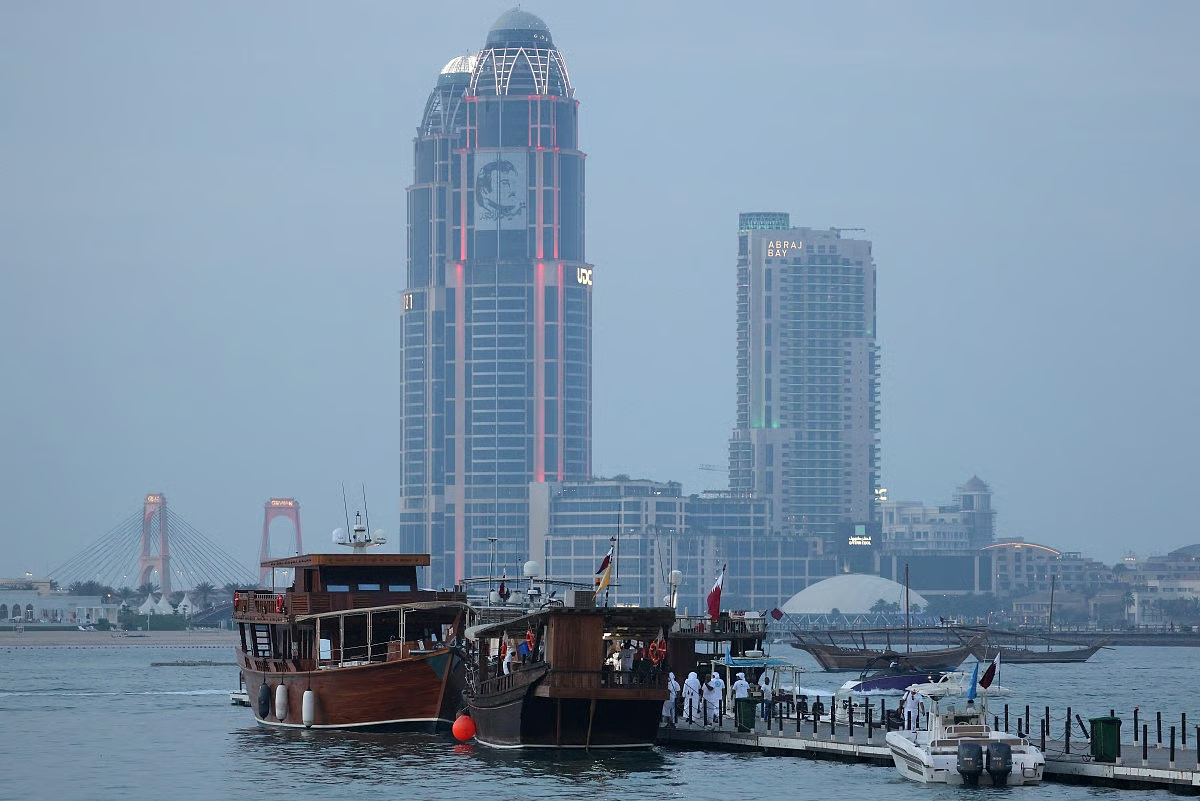
In light of recent geopolitical developments in the Gulf region, Qatari authorities have reassured the public that the security situation in Qatar remains stable and under control, despite precautionary advisories issued by some foreign embassies to their citizens.
Dr. Majed Al Ansari, Advisor to the Prime Minister and Spokesperson for the Qatari Ministry of Foreign Affairs, emphasized that these advisories—such as the one issued by the US Embassy in Qatar—do not reflect the existence of any specific or credible threat. The US advisory, which recommended American citizens “shelter in place,” was described as a precautionary step taken out of “an abundance of caution,” following recent US airstrikes on Iranian nuclear facilities.
Qatar’s Ministry of Interior and security services are said to be monitoring the situation closely, with readiness to implement any necessary measures to maintain public safety and national security. Al Ansari took to social media platform X (formerly Twitter) to reassure Qatari citizens, residents, and visitors, confirming that Qatar remains calm and fully prepared to respond to any developments.
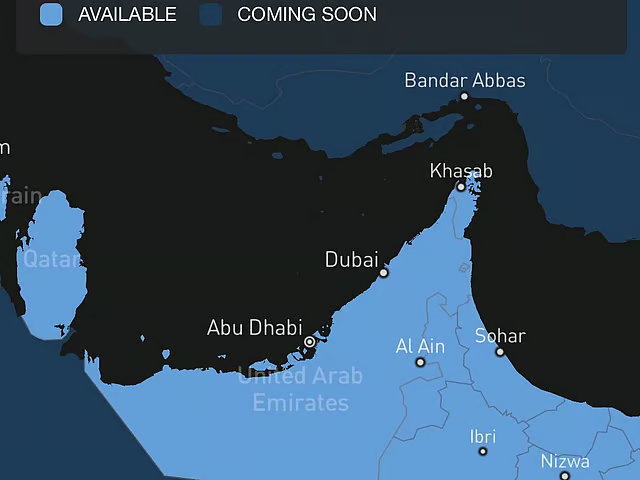
This message comes at a time when Dubai and the UAE, as well as regional neighbors India and Pakistan, are closely watching the situation. India and Pakistan, both of which have significant expat populations living and working in Qatar and Dubai, are likely to issue travel advisories or diplomatic updates as the situation evolves.
In response to the weekend’s US bombing of three Iranian nuclear sites, Qatar has expressed deep regret over the escalation and warned of the potential consequences of further military confrontation. The Qatari government reiterated its call for de-escalation and a return to diplomatic dialogue, underscoring the need for peaceful resolutions in order to preserve regional security.
Qatar is actively working with international and regional partners, including stakeholders in the UAE, India, and Pakistan, to help mediate and ease rising tensions. This diplomatic approach is in line with Qatar’s broader commitment to regional peace, economic stability, and security cooperation—critical values shared by countries like the UAE and India, who depend heavily on uninterrupted Gulf trade and energy flows.
As tensions continue in the Middle East, Dubai’s global business hub, India’s oil markets, and Pakistan’s diaspora communities all remain highly sensitive to any disruption in Gulf security. Regional unity, led by Qatar and the UAE, will be vital in ensuring peace and protecting the livelihoods of millions connected to this economically vital region.